

Sample Submission
Clients only need to provide compounds targeting the desired biological target (2–3 mg per compound). We will arrange the corresponding screening and testing services and deliver a professional analytical report.
Inquiry & Ordering
For any inquiries, please contact our team for prompt assistance.
In vitro drug screening is most commonly applied in anti-tumor research. We offer a panel of over 110 STR-authenticated human cancer cell lines, enabling primary screening of a wide range of compounds. In addition to direct screening against enzymatic targets, we also support cell-based assays when the specific drug target is unknown. By evaluating compound effects at the cellular level, we help identify more effective and safer drug candidates.
With years of experience in drug screening, AnyMol provides a wide range of high-quality, advanced services. We can also design and optimize experimental workflows based on your specific needs, delivering tailored solutions to help you rapidly identify promising compound structures in the early stages of drug discovery.
| Categories | Human tumor cells |
|---|---|
| Glioma | A172、U-118 MG、U-87 MG、U251 |
| Oral, tongue, nasal, nasopharyngeal, and throat cancers | KB、Tca-8113、CAL 27、CNE、FaDu、HEp-2 |
| Thyroid cancer | SW579、TT |
| Esophageal cancer | Eca-109、TE-1 |
| Breast Cancer | ZR-75-1、SK-BR-3、MDA-MB-468、MDA-MB-453、MDA-MB-231、MCF-7、BT-474、T-47D、BT-549、 MDA-MB-435、Hs 578T |
| Gastric cancer | SNU-1、NCI-N87、KATO III、BGC-823、HGC-27、AGS |
| Liver Cancer | Hep G2、Hep 3B2.1-7、HCCC-9810、HuH-7、QGY-7701、RBE、HuH-6 |
| Lung Cancer | NCI-H460、NCI-h458、NCI-H1650、NCI-H1299、NCI-H292、HCC827、A549、SK-MES-1、 Calu-6、NCI-H1975、95-D、NCI-H226、SPC-A-1、Calu-3 |
| Gallbladder Cancer | GBC-SD |
| Pancreatic Cancer | SW 1990、PANC-1、CFPAC-1、BxPC-3、AsPC-1 |
| Prostate Cancer | PC-3、PC-3M、DU 145、22RV1 |
| Renal cancer | SK-NEP-1、Caki-1、786-O(786-0)、OS-RC-2、769-P |
| Ovarian Cancer | SK-OV-3、OVCAR-3、HO-8910 |
| Cervical Cancer | C-33 A、MS751、SiHa、Ca Ski、HeLa、HCC 94、Ishikawa、ME-180 |
| Endometrial Adenocarcinoma | RL95-2、HEC-1-A、HEC-1-B、C-33 A、MS751、SiHa、Ca Ski、HeLa、HCC 94、Ishikawa、ME-180 |
| Bladder Cancer | 5637、UM-UC-3、SW 780、J82、T24、EJ-1、RT4 |
| Colorectal cancer | SW620、LoVo、HT-29、HCT 116、COLO 205、RKO-E6、SW1116、RKO、LS 174T、Caco-2、 SW480 [SW-480]、DLD-1、HCT-15 |
| Osteosarcoma | Saos-2、U-2 OS、MG-63、SW 1353 |
| Neuroblastoma | SK-N-SH、SK-N-BE(2)、SH-SY5Y[SHSY-5Y] |
| Lymphoma | CA46、Raji、NAMALWA、RAMOS、U-937、Daudi |
| Skin Cancer, Melanoma | A-431、A-375、C918 |
| Leukemia | HuT 78、6T-CEM、Jurkat, Clone E6-1、KG-1、CCRF-CEM、CEM/C1、HL-60、K-562、THP-1、A3、HEL |
| Others | RD、JAR、JEG-3、HT-1080、Acc-2、etc. |
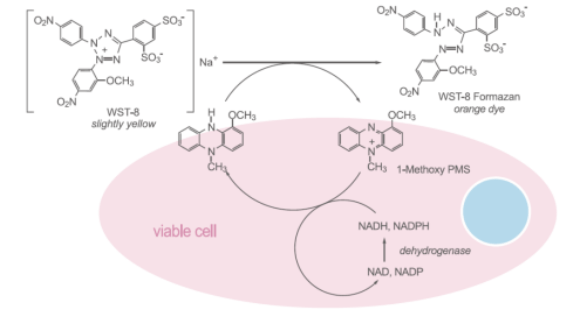 CCK-8 Asssay
WST is reduced by cellular dehydrogenases in the presence of the electron carrier 1-Methoxy PMS (1-methoxy-5-methylphenazinium methyl sulfate) to form a highly water-soluble yellow formazan dye.
The amount of formazan produced is directly proportional to the number of viable cells. Therefore, the CCK-8 assay utilizes this property to directly assess cell proliferation and cytotoxicity.
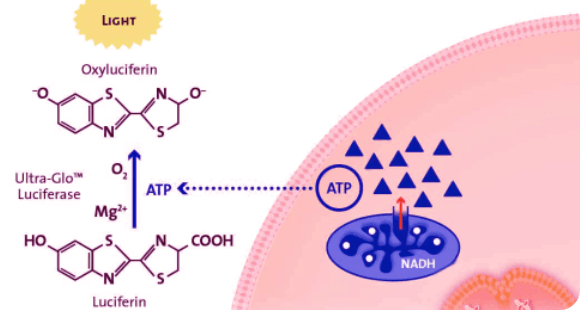 Cell Titer-Glo Assay
Viable cells rely on ATP to support various biological activities, and the amount of ATP released is positively correlated with the number of living cells.
The luciferase-catalyzed reaction that produces bioluminescence requires ATP. By measuring the intensity of the luminescent signal, the ATP content released from lysed cells can be determined. Thus, the CellTiter-Glo assay indirectly reflects cell viability.